Quick Answer
Rivals can come from amateur fights and reappear as pro rematch prospects: the boxers who beat you as an amateur become your rivals, and when one turns pro your trainer emails you suggesting a rematch. To follow up on Bruisers 2D Boxing rivals, check your inbox for a message naming an old amateur opponent who has reached the pro leagues, then look for that boxer among your opponents. The close-fights-and-cup-ties rivalry rules you may have read about come from the fan-made Undercard mod, not the base career.
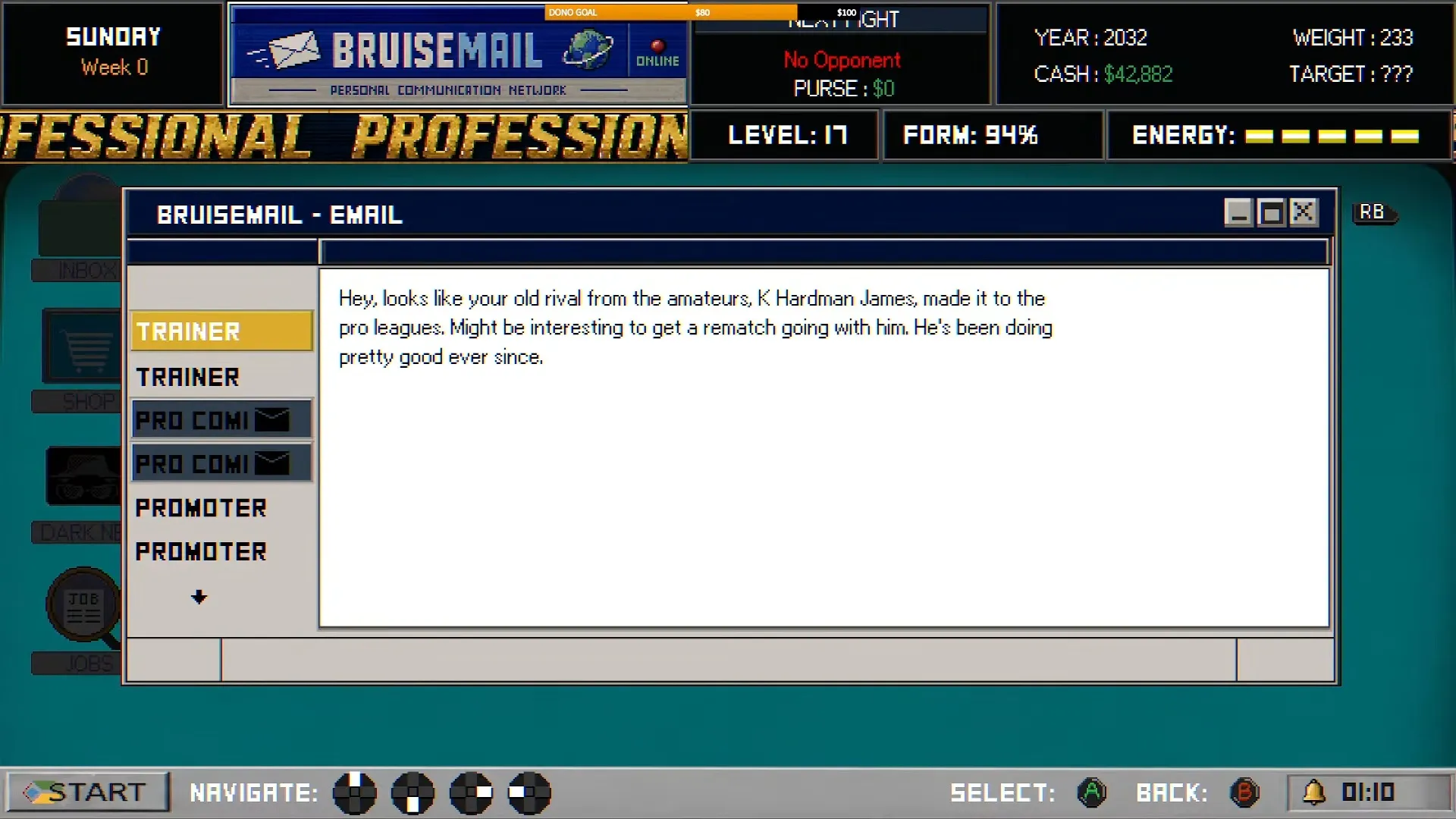
The rival prompt is a BruiseMail from your Trainer: "looks like your old rival from the amateurs… made it to the pro leagues. Might be interesting to get a rematch going with him."
Shown at 107:10 in Devil Sheep’s video.How do rivalries start in Bruisers 2D Boxing?
Rivalries start in the amateurs — the fighters who beat you there are the ones who come back as rivals. One streamer checked his list and said: "So, you got three rivals, K Hardman, MB Bully, and Hardman James. All these three guys beat us in uh amateurs."
Keep that in proportion. It's one career's three rivals; it doesn't prove every amateur loss becomes a rivalry. What it shows is the link: an earlier fight, then a boxer you later want to face again.
If you're still working through the amateur to pro career progression, remember who you fought along the way. A name from that stretch can matter again once you move into professional boxing.
Where do you find an old amateur rival?
Check your inbox for a message saying an old amateur rival has reached the pro leagues. One streamer opened his inbox, read "Looks like an old rival from the amateurs. K. Hardman James made it to the pro leagues. Might be interesting to get a rematch going with him," then went looking for him among the opponents.
Follow the same order when a familiar name shows up:
- Read the inbox message and identify the old opponent it names.
- Check whether the message says that boxer has reached the pro leagues.
- Look for that named boxer among your opponents if you want to pursue the suggested rematch.
Go by the name in your own message. Your rivals come from your fighter's history, so another player's rival isn't a target you need to find.
The email is a suggestion, not an order — it says a rematch "might be interesting." Here's the catch most people miss: a rival who just turned pro can sit below you on the ladder, so the rematch can mean fighting down. That same streamer searched for his rival, guessed "He'd be at the bottom, wouldn't he?", then said, "Why would I fight anyone below me, right? I want to climb," and skipped it for now. Decide whether settling the score is worth a fight that won't move your ranking.
How can rivals change your professional career?
An old amateur rival can come back as a suggested rematch, carrying that earlier matchup into the pros and giving you a familiar opponent to consider.
In another career, the in-game message named MB Billy as an old amateur rival who had made it to the Pro League, said he'd been performing well, and suggested a rematch might be interesting. The point was simple: someone from the fighter's amateur past was now part of the pro scene.
Later in a different run, a streamer picked his opponent purely because of their history: "We're going to fight this guy. We had rival with him. It'll be good." So rivalries matter in two practical ways — the inbox brings an old name back to your attention, and the history can decide who you want to fight next.
A suggested rivalry rematch is not the same thing as a title-shot message. If your next goal is a championship opportunity, follow the separate title fights and rankings topic.
Are top-ten opponents' game plans a rivalry effect?
No — the warning about opponents studying your style comes from reaching the top ten, not from a single rivalry. It tells you that from then on, everyone you fight will know how you fight and arrive with a plan built to beat you.
Read your messages with that split in mind. An old amateur opponent turning pro is about your history with one boxer. The top-ten warning is about the whole level of competition. Don't mix the two when you're working out why an upcoming opponent deserves attention.
Do Bruisers: The Undercard rivalries use the same rules?
No. Bruisers: The Undercard describes rivalries inside its own fan-made mod league: close fights, knockouts and cup ties build bad blood, and the history between both fighters is shown before a rematch.
That's a different setting from an old amateur rival showing up in your career inbox. If you're reading about cup ties or a full rivalry history before a league rematch, check which mode you're actually playing before you apply it.
The Undercard's league description belongs to a fan-made mod. Keep those mechanics with Bruisers 2D Boxing mods rather than using them as the trigger list for your original career.
Once you've checked the named rival in your inbox, continue with Bruisers 2D Boxing career mode for the broader career path.
FAQ
Yes. One streamer listed three rivals, and all three had beaten his fighter in the amateurs.
Your inbox. The message comes from your trainer, says an old amateur rival has reached the pro leagues and suggests a rematch.
Yes, as a pro rematch prospect. In one career the message named MB Billy as an old amateur rival who had reached the Pro League.
No. That warning covers everyone at the top-ten level. It's separate from the message naming a specific boxer as an old amateur rival.
Yes, in The Undercard's mod league, close fights, knockouts and cup ties build bad blood. That rule belongs to the mod — applying it to the original career mixes two different systems.